
TL;DR
- La cylindrée du moteur est directement liée à la puissance, à l'accélération, au couple et au niveau de difficulté du pilote.
- Les motos tout-terrain de petite cylindrée, comme les modèles de 50 à 110 cm3, conviennent aux enfants et aux débutants car elles sont légères et faciles à contrôler.
- Les motos de moyenne cylindrée, notamment les modèles de 125 à 250 cm³, offrent le meilleur équilibre entre puissance et maniabilité, ce qui les rend idéales pour la plupart des motards adultes débutants et intermédiaires.
- Les motos tout-terrain de 450 cm3 offrent un couple et une vitesse extrêmes et exigent une maîtrise technique avancée ainsi qu'une grande force physique. Elles sont donc principalement recommandées aux pilotes professionnels ou expérimentés.
- Choisir une cylindrée inadaptée peut réduire le contrôle, augmenter le risque d'accident et faire grimper les coûts d'entretien.
- Pour choisir la cylindrée adaptée à leur moto tout-terrain, les pilotes doivent prendre en compte des facteurs tels que l'âge, la taille, le niveau de compétence et les objectifs de conduite.
Ce guide explique comment les performances des motos tout-terrain de 50 à 450 cm³ varient selon la cylindrée, à quoi chaque catégorie de moteur est le mieux adaptée et comment éviter d'acheter une moto tout-terrain trop puissante ou trop faible pour le niveau de compétence du pilote.
Que signifie la cylindrée d'une moto tout-terrain et pourquoi est-ce important ?
La cylindrée d'un moteur de moto tout-terrain fait référence à sa capacité, mesurée en centimètres cubes. La cylindrée décrit la quantité de matière pouvant être utilisée pour le fonctionnement du moteur. air et carburant que le moteur peut brûler lors de la combustion.
Une moto tout-terrain 125 cm3 à 2 temps et une moto tout-terrain 125 cm3 à 4 temps diffèrent en termes de puissance, de caractéristiques de couple et d'exigences d'entretien.
Il est crucial de noter que les moteurs à deux temps et à quatre temps de même cylindrée peuvent avoir des performances très différentes. La moto de motocross 125 cm3 à deux temps produit une meilleure accélération et une puissance de pointe supérieure à celle d'une moto tout-terrain quatre temps de 125 cm3.
Notez que les chiffres de performance et les comparaisons présentés dans cet article sont principalement basés sur des motos tout-terrain à quatre temps, qui sont plus couramment utilisées pour Équitation de loisirs, randonnée équestre et applications pour débutants.
Selon l'American Motorcyclist Association, lors du choix de la cylindrée d'un moteur de moto tout-terrain, compétence du cavalier et type de terrain sont les facteurs les plus importants à prendre en compte.
Comment la cylindrée d'une moto tout-terrain influence ses performances (Aperçu des modèles de 50 à 450 cm³)
Les sections suivantes expliquent comment la cylindrée du moteur influe sur les performances des motos tout-terrain en termes de vitesse. couple, le contrôle et l'adéquation du pilote.
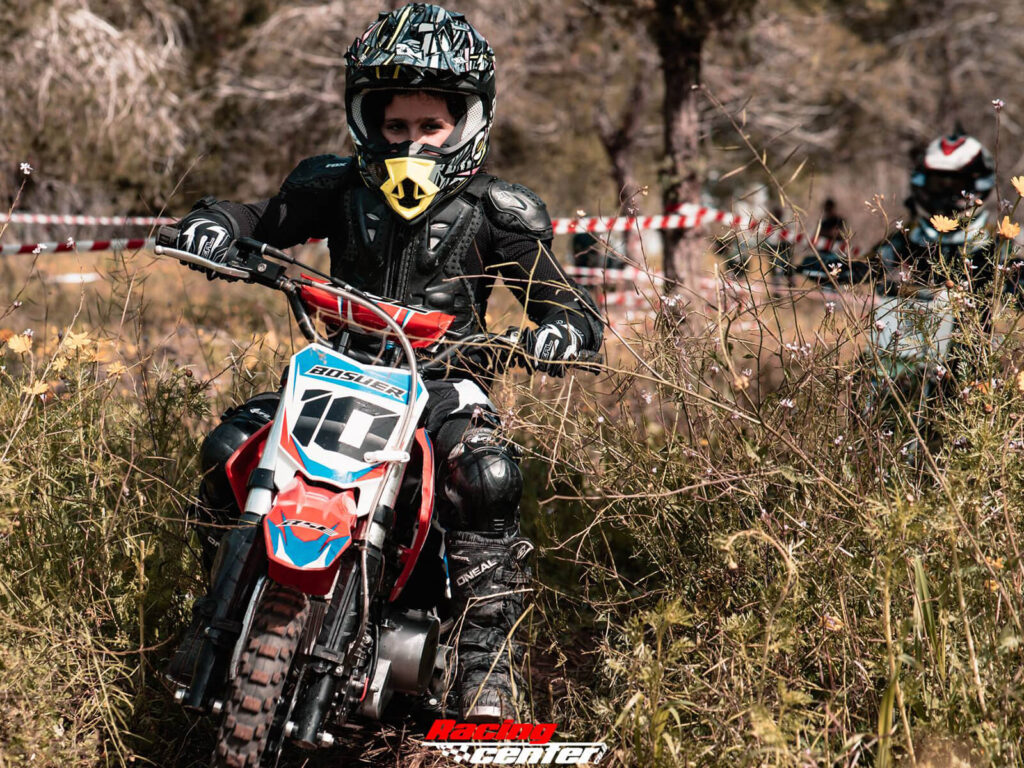
Motos tout-terrain de 50 à 110 cm³ (pour enfants et débutants)
Une moto tout-terrain de 50 à 110 cm3 est idéale pour les enfants et les pilotes débutants car elle est légère et met l'accent sur la sécurité, la facilité d'utilisation et la confiance. plutôt que la vitesse.
La moto tout-terrain 50 cm3, avec sa vitesse de 40 à 65 km/h et sa réponse douce à l'accélérateur, aide les nouveaux pilotes à apprendre l'équilibre et les techniques de pilotage. Ces motos sont souvent utilisées sur terrain plat, petites pistes et zones d'entraînement où le contrôle prime sur la vitesse. Honda CRF50F Elle est largement utilisée par les jeunes pilotes qui apprennent l'équilibre et le contrôle de l'accélérateur, et la Kawasaki KLX110R offre légèrement plus de puissance et de débattement de suspension pour les adolescents.
La moto tout-terrain 110 cm3 offre une vitesse (64 à 89 km/h) et une accélération légèrement supérieures à celles d'une 50 cm3. moto cross. Grâce à son couple plus élevé, il est idéal pour les montées et convient parfaitement à enfants ou adolescents ayant une certaine expérience de l'équitation.
Pour les plus jeunes (4 à 8 ans), une moto tout-terrain de 50 cm3 est idéale, tandis que pour ceux qui ont une certaine expérience (8 à 13 ans), une moto tout-terrain de 110 cm3 est préférable.
Il est important de noter que si un adulte conduit une moto de 50 cm³, l'accélération devient très faible et les performances de la suspension peuvent également diminuer. Par conséquent, lorsqu'il s'agit de choisir entre une moto tout-terrain de 50 cm³ et une de 110 cm³ pour un enfant, Le poids doit toujours être pris en compte..
Motos tout-terrain de 125 à 250 cm³ (niveau débutant à intermédiaire)
Les motos tout-terrain de 125 cm³ offrent une puissance et une maniabilité modérées, ce qui les rend adaptées aux débutants et aux pilotes de niveau intermédiaire. En revanche, les motos de 250 cm³ offrent un couple nettement supérieur, une accélération plus franche et des performances globales bien meilleures. surtout sur les collines et les terrains accidentés.
Une moto tout-terrain de 125 cm³ atteint généralement une vitesse de 80 à 105 km/h avec une accélération régulière et fluide, tandis qu'une moto tout-terrain de 250 cm³ peut atteindre environ… 70 à 85 mph et fournir plus rapidement accélération, notamment en tout-terrain. Ainsi, une moto tout-terrain de 250 cm³ est davantage axée sur la performance, tandis qu'une 125 cm³ est plus adaptée aux débutants. Pour les adultes débutants, une moto de 125 cm³ ou 250 cm³ comme la Honda CRF125F, la Yamaha YZ250F ou la Honda CRF250R est idéale.
Une moto de 125 cm³ est adaptée aux circuits légers et sinueux ainsi qu'aux environnements d'apprentissage techniques où le contrôle prime sur la vitesse, tandis qu'une moto de 250 cm³ est plus adaptée à… sentiers ouverts, pistes de motocross et terrains mixtes là où la vitesse et un couple plus important sont nécessaires.
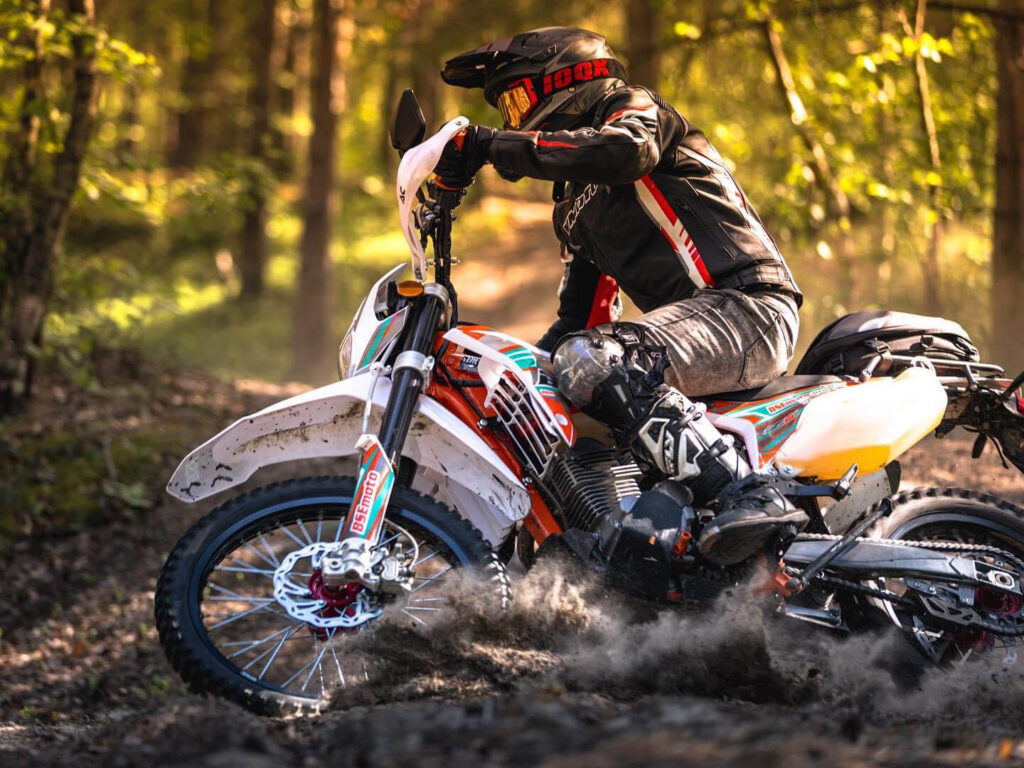
Motos tout-terrain de 250 à 450 cm³ (niveau avancé et performance)
Bien que toutes deux soient utilisées en motocross et en tout-terrain, les motos tout-terrain de 250 cm³ et de 450 cm³ diffèrent considérablement. La principale différence entre ces deux motos réside dans leur Puissance et couple.
Une moto tout-terrain de 250 cm3 peut développer environ 20 à 46 chevaux, selon que le modèle soit conçu pour la randonnée de loisirs ou la compétition de motocross. moto tout-terrain 450cc, En revanche, il développe plus de 50 à 60 chevaux et un couple plus important à bas régime. Cela signifie que la moto accélère plus fort et offre une vitesse impressionnante sur tous les rapports, ce qui peut parfois être Un défi pour les cyclistes de niveau intermédiaire.
En résumé, une moto de 250 cm³ offre une puissance maîtrisable et facile à prendre en main pour l'entraînement, tandis qu'une moto tout-terrain de 450 cm³ est conçue pour un couple maximal et offre une vitesse de pointe pour la compétition. La consommation de carburant diffère également entre les deux modèles. Une moto tout-terrain de 250 cm³ est plus économe et peut atteindre environ 30 à 40 MPG (miles par gallon), selon le terrain, l'intensité de la conduite et le réglage du moteur, tandis qu'une moto de 450 cm³ consomme davantage et peut atteindre en moyenne environ 20 à 30 MPG, selon les conditions de conduite et l'utilisation de l'accélérateur.
Enfin, l'entretien d'une moto tout-terrain de 450 cm³ peut s'avérer sensiblement plus coûteux que celui d'un modèle de 250 cm³ en raison des contraintes accrues sur le moteur, d'une consommation de carburant plus élevée et d'un besoin d'entretien plus fréquent. Les coûts d'entretien réels varient en fonction de l'intensité d'utilisation, du terrain et des intervalles d'entretien.
Une moto tout-terrain de 250 cm³ est idéale pour les pilotes débutants et intermédiaires en motocross, pour la pratique technique sur sentiers, le développement des compétences et les parcours hors route balisés. Une moto tout-terrain de 450 cm³ est quant à elle plus adaptée aux pilotes confirmés. pistes ouvertes, dunes de sable et ascension de collines. La KTM 450 SX-F, la Honda CRF450R et YamahaYZ450F elles sont conçues pour les motards expérimentés qui ont besoin d'une accélération maximale et d'un couple puissant.
Comment la cylindrée influence-t-elle le style de conduite et le choix du terrain ?
La cylindrée influe sur le comportement d'une moto tout-terrain sur différents types de terrains. Choisir la bonne cylindrée permet aux pilotes d'être plus performants et plus en sécurité dans diverses conditions hors route.
Sentiers étroits
Les cyclistes qui préfèrent les sentiers étroits et sinueux, technique, plein de virages serrés, de racines et d'obstaclesIls tirent le meilleur parti des motos de petite cylindrée, comme celles de 125 à 250 cm³. Ces motos sont plus légères, ce qui garantit :
- meilleure maniabilité
- Une alimentation électrique plus fluide et mieux contrôlée
- Moins de fatigue pour le pilote dans les sections techniques
Une cylindrée plus faible sur une moto tout-terrain pour les sentiers étroits permet aux pilotes de se concentrer davantage sur l'équilibre et la précision que sur la puissance.
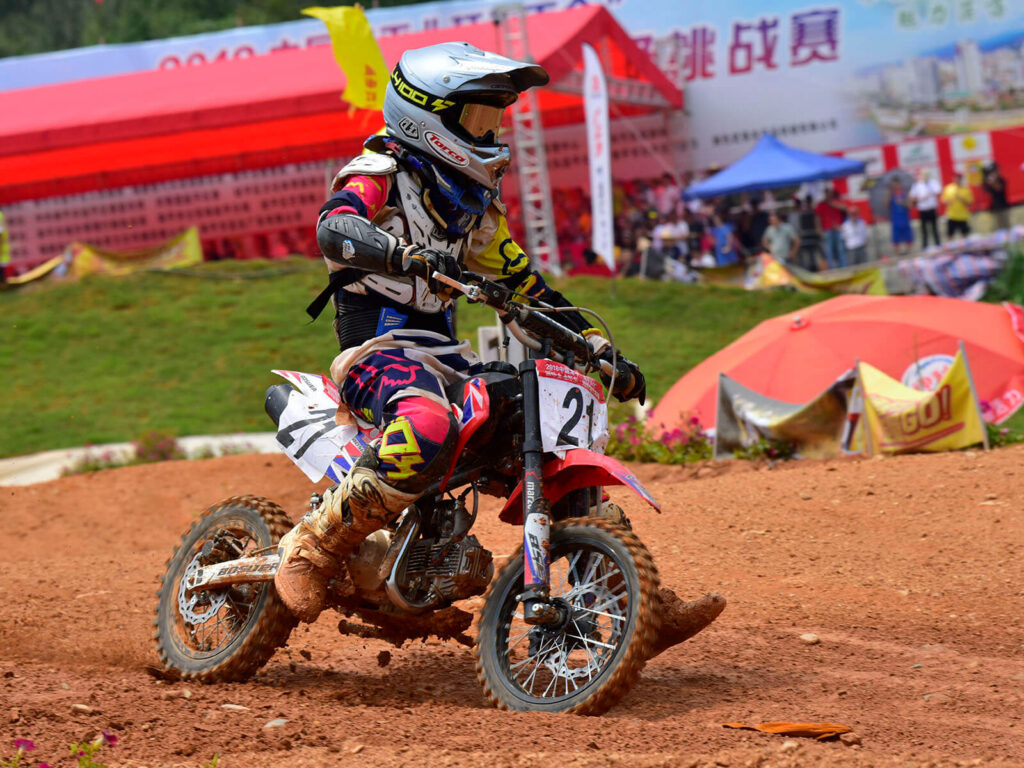
Dunes de sable
L'élan étant essentiel en conduite sur sable, un 450cc est le Meilleure moto tout-terrain de 60 cm³ pour les dunes de sable. La conduite sur sable nécessite une puissance continue pour éviter que la moto ne s'enlise.
Une moto de 450 cm3 permet d'entretenir élan Sur sable mou, elle offre une meilleure accélération sur terrain meuble et une stabilité accrue à haute vitesse. Elle réduit également la fréquence des changements de vitesse.
Sentiers d'enduro
Pour les parcours enduro, une moto de 250 cm³ est souvent le meilleur choix. L'enduro se pratique sur des terrains variés, comprenant rochers, boue, sable et sentiers forestiers. Une moto de 250 cm³ offre un excellent compromis : elle fournit suffisamment de puissance pour les montées et les passages techniques tout en restant assez légère pour une bonne maniabilité.
Elle est également plus facile à manier sur les longs trajets et pardonne davantage les erreurs du pilote. Globalement, la 250 cm3 est largement considérée comme la plus performante. Moto tout-terrain polyvalente.
Ascensions de collines
Les motos de grosse cylindrée sont les meilleures motos tout-terrain pour les montées. Les modèles de grosse cylindrée, notamment les 450 cm3, offrent une meilleure adhérence, un couple important à bas régime, évitent les calages et permettent une accélération plus rapide en montée, nécessitant moins d'élan.
Les motos de plus faible cylindrée peuvent toujours gravir des côtes, mais elles exigent une plus grande habileté du pilote et Gestion prudente de la dynamique.
Poids et niveau de compétence du pilote
Le poids et le niveau de compétence du pilote ont également un impact significatif sur le choix du moteur :
- Un moteur de plus petite cylindrée, adapté au poids du pilote, assure une meilleure maniabilité et un contrôle accru.
- Les motards plus lourds bénéficient de motos de plus grande cylindrée grâce à une meilleure maniabilité. rapport puissance/poids.
- Les débutants devraient commencer par des motos de plus faible cylindrée pour développer leur contrôle et leur confiance.
- Les motards confirmés peuvent acheter des motos de plus grosse cylindrée pour améliorer leurs performances et leur vitesse.
Cylindrée recommandée pour une moto tout-terrain en fonction du poids du pilote
| Poids du cycliste | Taille de moteur recommandée | Type de cavalier typique |
| Moins de 50 kg | 50cc–125cc | Enfants et débutants légers |
| 110–175 livres | 125 cm³–250 cm³ | Adolescents, adultes débutants, cavaliers intermédiaires |
| Plus de 79 kg | 250 cm³–450 cm³ | Utilisation par des pilotes expérimentés et sur des terrains accidentés |
Tableau comparatif des cylindrées des moteurs de motos tout-terrain (50cc–450cc)
Vous trouverez ci-dessous un tableau comparatif des cylindrées des motos tout-terrain :
| La taille du moteur | Niveau de puissance | Idéal pour | Niveau de compétence | Plage de vitesse |
| 50cc | Très bas | Enfants | Débutant | Faible |
| 110cc | Faible | Enfants/adolescents | Débutant | Modéré |
| 125cc | Moyen | Adolescents/adultes | Débutant–Intermédiaire | Moyen |
| 250cc | Haut | Trail/enduro | Intermédiaire | Haut |
| 450cc | Très haut | Pilotes MX/pro | Avancé | Très haut |
Comment choisir la bonne cylindrée pour sa moto tout-terrain (guide de décision) ?
Pour choisir la cylindrée de moteur idéale pour votre moto tout-terrain, suivez la procédure étape par étape mentionnée ci-dessous.
Étape 1 : Tenir compte de l’âge et de la taille du cavalier
Commencez par tenir compte de la taille et de l'âge de la personne qui utilisera le vélo. Les jeunes cyclistes ont besoin de hauteur de selle réduite et vélos plus légerset ont souvent du mal à manier les lourdes motos de 450 cm3.
Étape 2 : Évaluer l'expérience de conduite
Les débutants ont besoin d'une moto tout-terrain qui offre distribution d'énergie prévisible, Les pilotes de niveau intermédiaire peuvent gérer une accélération plus franche et une réponse à l'accélérateur plus agressive. Il est important d'évaluer l'expérience du pilote avant de choisir la moto tout-terrain.
Étape 3 : Adapter au terrain
Identifiez le type de terrain sur lequel vous utiliserez le plus souvent votre moto. Pour les terrains rocailleux, choisissez une moto tout-terrain de 125 à 250 cm³ ; pour les dunes de sable, optez pour une moto tout-terrain de 450 cm³ ; pour les sentiers faciles, choisissez une moto de 110 à 250 cm³ ; et pour motocross, choisissez un Moto de 250 à 450 cm3.
Étape 4 : Équilibre et contrôle de la puissance
Les motards qui ne maîtrisent pas l'accélérateur ont souvent tendance à ralentir et à devenir instables. Il est important de choisir une cylindrée qui permette aux motards de maintenir une bonne vitesse. équilibre entre pouvoir et contrôle.
Étape 5 : Vérifier le budget d’entretien
Les motos de plus grosse cylindrée coûtent généralement plus cher à entretenir en raison d'une consommation de carburant plus élevée, d'une usure plus rapide des pneus et de contraintes accrues sur le moteur. Il est important de bien définir son budget et d'investir dans une moto de grosse cylindrée uniquement si possible. gérer les coûts de maintenance.
Que ne faut-il pas faire lorsqu'on choisit la cylindrée du moteur ?
Voici quelques erreurs courantes commises par les acheteurs lors du choix de la cylindrée :
- Achat d'une 450cc vélo comme première moto tout-terrain sans aucune expérience préalable en conduite hors route.
- Sans tenir compte du poids du pilote ni des réglages de suspension.
- On part du principe qu'un moteur plus gros améliore automatiquement l'expérience de conduite.
- Copier les choix d'achat des pilotes de motocross professionnels sans tenir compte de la formation personnelle et du niveau de compétence.
- Sous-estimation des coûts d'entretien.
Quand ne faut-il PAS passer à une moto de plus grosse cylindrée ?
Même si les motos de plus grosse cylindrée offrent une meilleure vitesse, il n'est pas toujours conseillé de passer à une moto plus puissante. Un motard ne devrait pas opter pour une moto plus grosse si :
- La commande d'embrayage est inconstante.
- L'endurance physique est limitée
- La technique de freinage n'est pas totalement maîtrisée.
- Le budget d'entretien est limité.
Un vélo plus petit aide les cyclistes à gagner en confiance et à améliorer leurs compétences, tandis que choisir un vélo plus grand trop tôt peut engendrer des hésitations et même… contribuent aux accidents.
FAQ
1. Comment la cylindrée du moteur affecte-t-elle les performances ?
Un moteur de grande cylindrée offre plus de puissance, de vitesse et de couple par rapport à un moteur de plus petite cylindrée.
2. Quelle cylindrée de moto cross devrais-je choisir ?
Vous devez choisir en fonction de votre expérience, terrain et contrôle. Idéalement, les motos tout-terrain de 125 à 250 cm³ sont les meilleures pour les débutants, tandis que pour les pilotes confirmés, les motos tout-terrain de 250 à 450 cm³ sont recommandées.
3. Une moto cross de 500 cm³ est-elle plus rapide qu'une de 450 cm³ ?
Oui, une moto tout-terrain de 500 cm3 est plus rapide qu'une moto de 450 cm3, mais elle Plus difficile à contrôler également.
Achetez dès maintenant la meilleure moto tout-terrain en vous associant à BSE Motors.
Le choix de la meilleure moto tout-terrain dépend de l'expérience du pilote, du terrain et du niveau de contrôle souhaité, et non pas seulement de la cylindrée. Que vous optiez pour une moto tout-terrain de 150 cm³ ou de 450 cm³, il est toujours recommandé de Choisissez un fabricant ou un fournisseur fiable.
BSE Motors est un fabricant et fournisseur chinois professionnel de motos tout-terrain, proposant une large gamme de modèles pour enfants, débutants, amateurs de randonnée et pilotes professionnels. Que vous recherchiez une moto de randonnée intermédiaire ou une machine de motocross de niveau professionnel, BSE Motors vous offre des solutions fiables pour répondre à tous vos besoins. Contactez-nous maintenant pour en savoir plus.
 FR
FR  EN
EN  DE
DE  AR
AR  RU
RU  ES
ES  PT
PT  CN
CN