
Resumindo:
- A progressão típica de competidores amadores locais para uma licença profissional envolve cinco etapas, e a maioria dos pilotos leva de 3 a 5 anos para concluir a transição.
- O investimento anual total é de aproximadamente £12.500 a £39.000 (incluindo veículo, equipamento, viagens e treinamento), quase inteiramente pago do próprio bolso antes de receber patrocínio.
- O acompanhamento personalizado oferece uma relação custo-benefício muito melhor do que modificações caras — as melhorias no tempo de volta resultantes do aprimoramento das habilidades geralmente superam as provenientes de atualizações de hardware.
- O patrocínio é dividido em níveis (patrocínio de equipamentos → financiamento parcial → contrato integral), e os ciclistas geralmente só se tornam elegíveis após alcançarem resultados consistentes em competições amadoras regionais/nacionais.
- O treinamento mental é tão importante quanto o treinamento físico: a velocidade de tomada de decisão e a resiliência durante as corridas impactam diretamente a consistência do desempenho.
Este guia explica Como se tornar um piloto profissional de motocross e como conseguir patrocinadores para motocross. É voltado para pilotos de nível intermediário que desejam aprimorar suas habilidades, gerenciar seus gastos e se tornarem pilotos profissionais.
Qual o caminho para se tornar um piloto profissional de motocross?
O caminho de piloto amador a profissional de motocross segue cinco etapas: habilidades básicas → corridas locais → competições regionais → eventos nacionais → solicitação da licença profissional.
Quadro de Progressão na Carreira
A estrutura de progressão de carreira para pilotos é apresentada abaixo:
- Comece aprendendo o controle básico da bicicleta e as habilidades fundamentais de pilotagem.
- Participe de corridas amadoras locais para ganhar experiência.
- Participe em competições regionais
- Competir em eventos amadores nacionais
- Candidate-se a uma vaga licença de corrida profissional
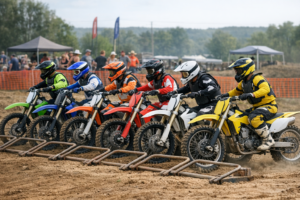
Diferença entre ciclistas amadores e profissionais
Os ciclistas amadores se diferenciam dos profissionais com base em:
- Consistência: Pilotos profissionais manter volta constante vezes em vez de se concentrar apenas em uma volta rápida.
- Controle de pressão: Os pilotos profissionais mantêm a calma e o foco durante as corridas, enquanto os amadores podem... pânico sob pressão.
- Adaptabilidade: Pilotos profissionais Adaptar-se rapidamente a diferentes condições de pista, enquanto os amadores têm dificuldades com isso.
- Disciplina: Pilotos profissionais seguir o treinamento adequadorotinas de condicionamento físico e recuperação, enquanto os amadores geralmente não têm essa estrutura.
Planejamento financeiro para uma carreira no motocross
Uma temporada competitiva de motocross amador custa aproximadamente entre 12.500 e 39.000 dólares por ano, antes de qualquer receita de patrocínio, tornando o planejamento financeiro tão importante quanto a habilidade de pilotagem.
Detalhamento típico dos custos anuais
A tabela abaixo apresenta a distribuição típica dos custos anuais de um piloto de motocross:
|
Categoria |
Custo estimado |
|---|---|
|
Compra e manutenção de bicicletas |
$5.000–$15.000 |
|
Equipamentos e acessórios de segurança |
$1.000–$3.000 |
|
Taxas de pista e inscrições em corridas |
$2.000–$5.000 |
|
Viagens e logística |
$3.000–$10.000 |
|
Coaching e treinamento |
$1.500–$6.000 |
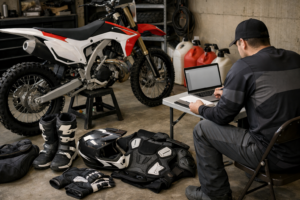
Esses Os custos podem variar. Dependendo do nível de comprometimento do ciclista, da quantidade de corridas em que participa e da distância que precisa percorrer para competir.
Estratégia de Otimização Orçamentária
Para evoluir mais rapidamente no motocross, os pilotos devem investir dinheiro apenas em itens que melhorem diretamente seu desempenho.Coaching particular É mais útil do que melhorias caras, porque um bom treinamento ajuda a aprimorar a técnica de pilotagem, a estratégia de corrida e a confiança geral.
Outro ponto fundamental é o tempo na pista. Quanto mais tempo um piloto passa praticando em pistas reais, mais rápido será seu progresso. Começar com corridas locais também é uma boa ideia, pois reduz o tempo de adaptação. custos de viagem e proporciona oportunidades de aprendizadoIsso também ajuda os ciclistas a ganharem confiança antes de passarem para níveis mais altos de competição.
Quando os entregadores começam a ganhar dinheiro?
No estágio profissional inicial, Os ciclistas podem começar a receber pequenos patrocínios, equipamentos gratuitos e prêmios em dinheiro por corridas. Isso ajuda a reduzir as despesas pessoais, mas geralmente não cobre todos os custos de competição e treinamento.
No estágio profissional estabelecidoPilotos de sucesso podem ganhar dinheiro por meio de contratos, bônus, patrocínios e endossos de marcas. Nesse nível, o motocross pode se tornar uma carreira em tempo integral e uma fonte de renda estável, mas somente se o desempenho se mantiver consistente ao longo do tempo.
Como se tornar um profissional com um programa completo de treinamento de motocross?
Os programas de treinamento de motocross mais eficazes dedicam aproximadamente 40% (3 horas) semanais a exercícios na moto, 30% (3 horas) a treinamento de força e cardiovascular e 30% (3 horas) à simulação de corrida e recuperação. Seguindo um plano de treinamento consistente e estruturado, os pilotos podem melhorar seus tempos de volta e o desempenho geral nas corridas.
Modelo de Plano de Treinamento Semanal
É fornecido um plano de treinamento de motocross detalhado para ajudar os pilotos a se profissionalizarem rapidamente:
|
Dia |
Foco |
|---|---|
|
Segunda-feira |
Treinamento de força + cardio |
|
Terça-feira |
Exercícios técnicos de equitação |
|
Quarta-feira |
Recuperação e mobilidade |
|
Quinta-feira |
Simulação de corrida |
|
Sexta-feira |
Aprimoramento de habilidades |
|
Fim de semana |
Corridas ou ciclismo em pista |
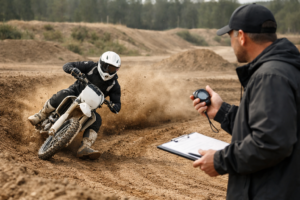
Análise detalhada da técnica básica de equitação
Desenvolver habilidades na pilotagem de motocross é a base para o sucesso de qualquer piloto. As principais técnicas que todo piloto deve aprender incluem:
- Técnica de curvas no motocross: O objetivo é ter uma entrada suave nas curvas e uma saída rápida, mantendo uma boa velocidade.
- Técnica de frenagem no motocross: Para controlar a velocidade adequadamente sem perder o equilíbrio ou a estabilidade.
- Técnica de salto no motocross: Para manter o controle no ar e pousar suavemente, preservando a velocidade e a segurança.
- Posição do corpo no motocross: Para manter o corpo equilibrado e ajustar-se rapidamente às condições da pista.
- Controle da embreagem no motocross: Para usar a embreagem corretamente, gerencie a potência e supere trechos técnicos com eficiência.
Habilidades de desempenho avançadas
Os pilotos podem se tornar mais competitivos melhorando seus tempos de volta através da escolha inteligente da linha de pista. Eles também devem praticar largadas de corrida de motocross e aprimorar a velocidade de reação. Aprender a controlar os saltos ajuda os pilotos a manter a velocidade. Mantendo-se baixo sobre o salto com melhor controle.
Os motociclistas também devem aprender Como andar em ondulações com ritmo e equilíbrio adequados, o que melhora a estabilidade e a velocidade em trechos acidentados. Na pilotagem em areia, a posição correta do corpo e o equilíbrio adequado do peso são muito importantes para manter o controle e a velocidade.
Treinamento Mental para Motocross
A força mental no motocross é tão importante quanto a força física. Os pilotos precisam manter o foco mesmo quando o corpo está cansado ou sob pressão. treinamento mental Ajuda os pilotos a tomar decisões rápidas, a manter a calma durante as corridas e Manter a confiança em condições de pista difíceis.
Como preparar sua moto de motocross para corridas?
Tendo um motocross Estar preparado para as condições de corrida é mais importante do que investir em melhorias caras. Se a moto estiver devidamente ajustada de acordo com o peso do piloto, seu nível de habilidade e as condições da pista, ambos A velocidade e o desempenho geral irão melhorar.
Prioridades do palco amador
Na fase inicial ou amadora, os ciclistas devem se concentrar em mantendo a bicicleta simplesÉ importante manter um equipamento confiável e bem conservado, em vez de gastar dinheiro com modificações avançadas. A manutenção regular ajuda a prevenir avarias e mantém o desempenho estável durante os treinos e as competições.
A suspensão deveria Combine o peso e o estilo de pilotagem do ciclista. Para manter o controle em saltos e terrenos acidentados, os pilotos também devem escolher os pneus adequados para diferentes superfícies, a fim de melhorar a aderência, a estabilidade e a confiança na pista.
Configuração de nível profissional
Em níveis profissionais, a configuração da bicicleta torna-se mais detalhada e focada no desempenho. Os profissionais precisam ajustar o motocicleta para diferentes pistas e estilos de pilotagem. Os profissionais precisam refinar seus ajustes por meio da análise de dados de voltas e testes na pista.
Eles precisam usar lPeças leves e avançadas Para melhorar a velocidade, a dirigibilidade e a durabilidade. Mesmo uma pequena alteração na configuração da moto pode fazer uma grande diferença no desempenho em corridas e no tempo de volta.
Quando atualizar o equipamento?
Os pilotos precisam atualizar seus equipamentos de corrida depois alcançar resultados consistentes nas corridas ou caso o desempenho seja limitado pelo equipamento. Antes de participar de competições de nível superior, o equipamento também deve ser atualizado.
Como conseguir oportunidades de patrocínio no motocross?
A presença constante no pódio em eventos amadores regionais ou nacionais, combinada com uma presença ativa nas redes sociais, são os dois fatores que mais diretamente atraem patrocinadores para o motocross.
Níveis de Patrocínio
Diferentes níveis de patrocínio incluem:
- Nível básico, que oferece equipamentos gratuitos ou descontos
- Nível intermediário, que fornece apoio financeiro parcial
- Nível superior, que inclui contratos completos e salários.
Quando começar a buscar patrocínio?
Os ciclistas podem começar a buscar patrocínio depois de alcançarem sucesso consistente no nível amador, especialmente em competições regionais ou nacionais, ou quando tiverem Resultados que podem ser apresentados aos patrocinadores.
Estratégia de Patrocínio Passo a Passo
Para aumentar as chances de conseguir patrocínio, os ciclistas devem seguir estes passos:
Passo 1: Construa um sólido currículo de corridas Com resultados e conquistas comprovados
Etapa 2: Crie uma forte presença nas redes sociais para demonstrar os resultados de desempenho.
Etapa 3: Desenvolver um perfil de ciclista profissional com detalhes e objetivos claros
Passo 4: Entre em contato com marcas que tenham uma proposta de valor clara e um histórico de desempenho comprovado.
Etapa 5: Manter relacionamentos de longo prazo com os patrocinadores através de profissionalismo e comunicação
O que os patrocinadores procuram?
Os patrocinadores procuram principalmente resultados nas corridas, uma postura profissional, envolvimento do público e potencial de crescimento futuro. Os ciclistas que demonstram consistência, disciplina e visibilidade. têm maior probabilidade de receber oportunidades de patrocínio a longo prazo.
Realidades da Carreira e Estratégia de Progressão Inteligente
Os três erros mais comuns que levam ao fim de uma carreira no motocross são gastar demais antes que os resultados justifiquem, negligenciar o condicionamento físico e a recuperação, e subir para as categorias profissionais muito cedo. Se os pilotos progredirem no ritmo certo e gerenciarem seus recursos adequadamente, o sucesso a longo prazo se torna muito mais fácil de alcançar.
Erros comuns a evitar
Alguns erros comuns que os motociclistas devem evitar incluem: Gastar demais sem ver resultados reais, ignorar o condicionamento físico e a recuperação, ingressar em aulas profissionais muito cedo e negligenciar o networking.
Abordagem de Progressão Inteligente
Uma melhor abordagem de progressão inclui dominar as habilidades atuais Antes de expandir para novos projetos, é fundamental construir resultados sólidos em nível local e aumentar gradualmente o investimento à medida que o desempenho melhora.
Quando o caminho pode não funcionar
Em alguns casos, a trajetória profissional no motocross pode não funcionar como esperado. Esses casos incluem:
- Se o orçamento for limitado, é melhor focar em corridas locais.
- Se ocorrem lesõesA recuperação e a saúde devem se tornar a principal prioridade.
- Se o progresso diminuir, investir em treinamento pode ajudar a aprimorar as habilidades.
- Se O tempo é limitado.O motocross deve ser encarado como uma atividade de tempo parcial.
Perguntas frequentes
Como se entra no motocross profissional?
Para entrar no motocross profissional, um piloto deve começar aprendendo as habilidades básicas de pilotagem, depois competir em corridas amadoras e, gradualmente, progredir para competições regionais e nacionais. Se o desempenho for consistente, o piloto pode se candidatar a uma vaga na categoria principal. Licença de piloto profissional.
Quanto dinheiro ganham os pilotos profissionais de motocross?
Os ganhos no motocross profissional variam bastante de acordo com o nível. Pilotos iniciantes podem ganhar de £10.000 a £30.000 por ano com pequenos patrocínios e prêmios em corridas. Pilotos de fábrica de nível intermediário geralmente ganham de £100.000 a £300.000, enquanto os melhores pilotos do AMA Supercross e do Pro Motocross podem ganhar £1 milhão ou mais anualmente por meio de contratos, bônus e patrocínios.
Quão difícil é ser um piloto de motocross?
Motocross é Muito desafiador fisicamente, mentalmente e tecnicamente. Para se tornarem ciclistas profissionais de sucesso, os atletas precisam treinar regularmente, lidar com lesões e ser capazes de ter um bom desempenho sob pressão.
Quanto tempo leva para se tornar um piloto profissional de motocross?
O tempo necessário varia de acordo com a idade de início e a intensidade do treino. Um ciclista que começa a competir no início da adolescência e treina consistentemente pode, realisticamente, atingir o nível profissional em 4 a 7 anos. Ciclistas que começam mais tarde podem precisar de mais tempo, mas um acompanhamento focado e uma progressão estruturada nas provas podem acelerar esse processo.
Qual a idade em que a maioria dos pilotos profissionais de motocross começa?
A maioria dos pilotos profissionais de motocross começa a pilotar entre os 4 e 8 anos de idade e inicia suas competições por volta dos 10-12 anos. No entanto, começar na adolescência (ou no final da adolescência) não é incomum, e alguns pilotos se profissionalizaram com sucesso após começarem entre os 15 e 17 anos com treinamento dedicado.
Torne-se um piloto profissional de motocross com a BSE Motors
Em resumo, tornar-se um piloto profissional de motocross é desafiador, mas possível com consistência. Conseguir patrocínio no motocross Também é possível. Seguindo uma abordagem estruturada passo a passo, os ciclistas podem aumentar suas chances de conseguir patrocínio.
Independentemente de você querer se tornar um piloto profissional de motocross ou apenas praticar o esporte como hobby, é importante investir nos equipamentos certos. Motor BSE é uma fabricante chinesa líder de motocicletas off-road, atendendo às necessidades de Atacadistas, revendedores e proprietários de marcas em todo o mundo. Entre em contato conosco hoje mesmo para saber mais sobre nós.
 PT
PT  EN
EN  FR
FR  DE
DE  AR
AR  RU
RU  ES
ES  CN
CN