Key Takeaways
- Most adults should start on a 125cc–250cc trail bike. 125cc automatic models are ideal for total beginners; 150–250cc models suit taller or heavier riders and give room to grow.
- The three specs that matter most for a first bike are seat height, wet weight, and power delivery — not top speed. A bike you can flat-foot and pick up is a bike you will actually ride.
- An automatic transmission removes the hardest learning curve on day one; a manual clutch takes focused practice — the time varies by rider — and opens up more models later.
- Budget for gear: a helmet, boots, gloves, goggles, and chest protector add roughly $300–$800 to your first purchase and should never be skipped.
- Buy the right size the first time — see our Dirt Bike Size Guide and Dirt Bike Cost Guide before you shop.
Note: all power and speed figures discussed in this article are based on four-stroke trail bikes. Motocross / two-stroke bikes deliver far more explosive power and are not recommended as a reference point for beginners. If a dealer quotes you a two-stroke MX model, that is a race machine, not a first bike.
Choosing the best beginner dirt bike for adults in 2026 is less about raw speed and more about finding a machine that builds your confidence instead of intimidating you off it. Off-road riding remains an established part of the U.S. powersports market, with dedicated training programs and riding opportunities available for new riders.
The good news: today’s market has more genuinely beginner-friendly options than ever, from lightweight automatic 125cc trail bikes to electric models with zero shifting at all. This guide breaks down exactly what to look for, which engine sizes fit which riders, and our top picks for 2026 — with a clear recommendation for most riders at every budget.
What Makes a Dirt Bike “Beginner-Friendly”?
Ignore marketing labels for a second. A beginner-friendly dirt bike is defined by four measurable characteristics, and you should check every one of them before you buy:
| Spec | Why It Matters for Beginners | What to Look For |
|---|---|---|
| Seat height | Can you touch the ground? Being able to flat-foot (or nearly) on the balls of your feet makes stops, turns, and panic moments far safer. | Around 32–35 in (81–89 cm) for average adult height; 36+ in for taller riders. Lowering kits exist if you are close. |
| Wet weight | A heavy bike is harder to pick up, harder to maneuver at slow speed, and more exhausting on a first day out. | Aim under 260 lb (118 kg) wet for your first bike; lighter is always better while learning. |
| Power delivery | Linear, forgiving power beats peaky, aggressive hit. Smooth torque lets you focus on body position, not the throttle. | Air-cooled or tuned-for-traction trail engines in the 9–30 hp range are perfect. |
| Maintenance | Your first bike should be simple to own. Every hour you spend wrenching is an hour you are not riding. | Easy-access air filter, simple carb or EFI, and affordable parts availability. |
The headline: do not shop by displacement alone. A well-set-up 250cc trail bike can be easier for a big adult to ride than a small 110cc bike that is physically too small. Fit first, power second. Our Which Size Dirt Bike Is Right for You? guide walks through the full fit checklist.
Which Engine Size Is Right for an Adult Beginner?
Here is how the common beginner engine sizes stack up for adult riders. Your weight, height, and confidence level matter more than your age — so read this as a spectrum, not a rulebook. Figures vary considerably by engine design, gearing, bike weight, rider weight and intended use, so treat them as ranges, not guarantees.
| Engine Size | Best For | Approximate Power Range | Typical Advertised Top Speed | Pro / Con |
|---|---|---|---|---|
| 110–125cc | Absolute beginners, lighter adults, teens, anyone nervous on a bike | 7–12 hp | 45–60 mph | Light, cheap, forgiving — but frames are compact, so riders much over ~190–200 lb will find the suspension overwhelmed. |
| 140–160cc | Beginners who want a bit more pace without a big power jump | 11–16 hp | 50–65 mph | A sweet spot: still manageable, but with more trail capability and climb. |
| 200–250cc | Taller / heavier adults, riders who want to keep the bike 2–3 years | 18–30 hp | 70–75 mph | Most room to grow and the best resale, but a bigger frame that demands more respect on the throttle. |
For a typical adult (5’5″–6’0″, 130–210 lb), the practical shortlist is a 125cc–150cc bike to learn on, or a 250cc if you are heavier or want to skip an upgrade cycle. For absolute beginners, the biggest mistake is buying too much bike too soon — a 450cc machine is a race weapon and belongs in the hands of experienced riders. See our 250cc vs. 450cc comparison to understand how big the power gap really is.
Frame size & seat height matter as much as engine size
The jump from 125cc to 250cc is not only about power — it is a physical change in frame size and suspension capacity. Many 125cc trail bikes (the CRF125F, for example) are built around a compact frame for older kids and smaller adults; put a 200+ lb rider on one and the suspension bottoms out on the first hard hit. 250cc four-strokes (CRF250F, WR250F) typically sit 35–38 in (89–96 cm) at the seat — comfortable for taller riders, but intimidating for shorter or brand-new riders who cannot flat-foot both feet.
| Factor | 125cc (4-Stroke Trail) | 250cc (4-Stroke Trail) | Notes |
|---|---|---|---|
| Typical advertised top speed | 45–60 mph | 70–75 mph | Varies by model, gearing, engine tune and rider weight — trail bikes favor controllable power over top speed. |
| Typical rider weight guidance | ≤ 190–210 lb | 190 lb + | Directional, not a hard rule — fit, seat height and confidence matter more than the number. |
| Experience level | Absolute beginner / teens & lighter adults | Confident beginner / larger adults | 250cc frames are bigger — test-sit one before you commit. |
| Approx. new price | $2,000–$3,500+ | $3,500–$6,500+ | Big Four (Honda, Yamaha, Kawasaki, Suzuki) sit at the top of these ranges. |
Figures for standard four-stroke trail bikes. Two-stroke motocross models are faster but are race bikes, not first bikes.
New bikes span two very different price worlds
North American pricing splits into two tiers. Under roughly $3,000 you are looking at used bikes or budget import brands (Apollo, Rokon, BSE and similar Chinese-built entry models). A brand-new 250cc trail bike from the Big Four (Honda, Yamaha, Kawasaki, Suzuki) typically starts around $4,500–$6,000+, and their popular 125cc models run about $3,000–$4,500. Budget honestly before you shop — a modest brand is perfectly fine to learn on, and a big name is not required to progress.
Our Top Beginner Dirt Bike Picks for 2026
These picks balance the four beginner specs above with real-world reliability and parts support. We have included models we manufacture and sell worldwide (marked with ★), so pricing reflects factory-direct wholesale, but every category also translates to name-brand equivalents if you prefer a local dealership.
 ★ Best Low-Seat Automatic Option (Beginners)
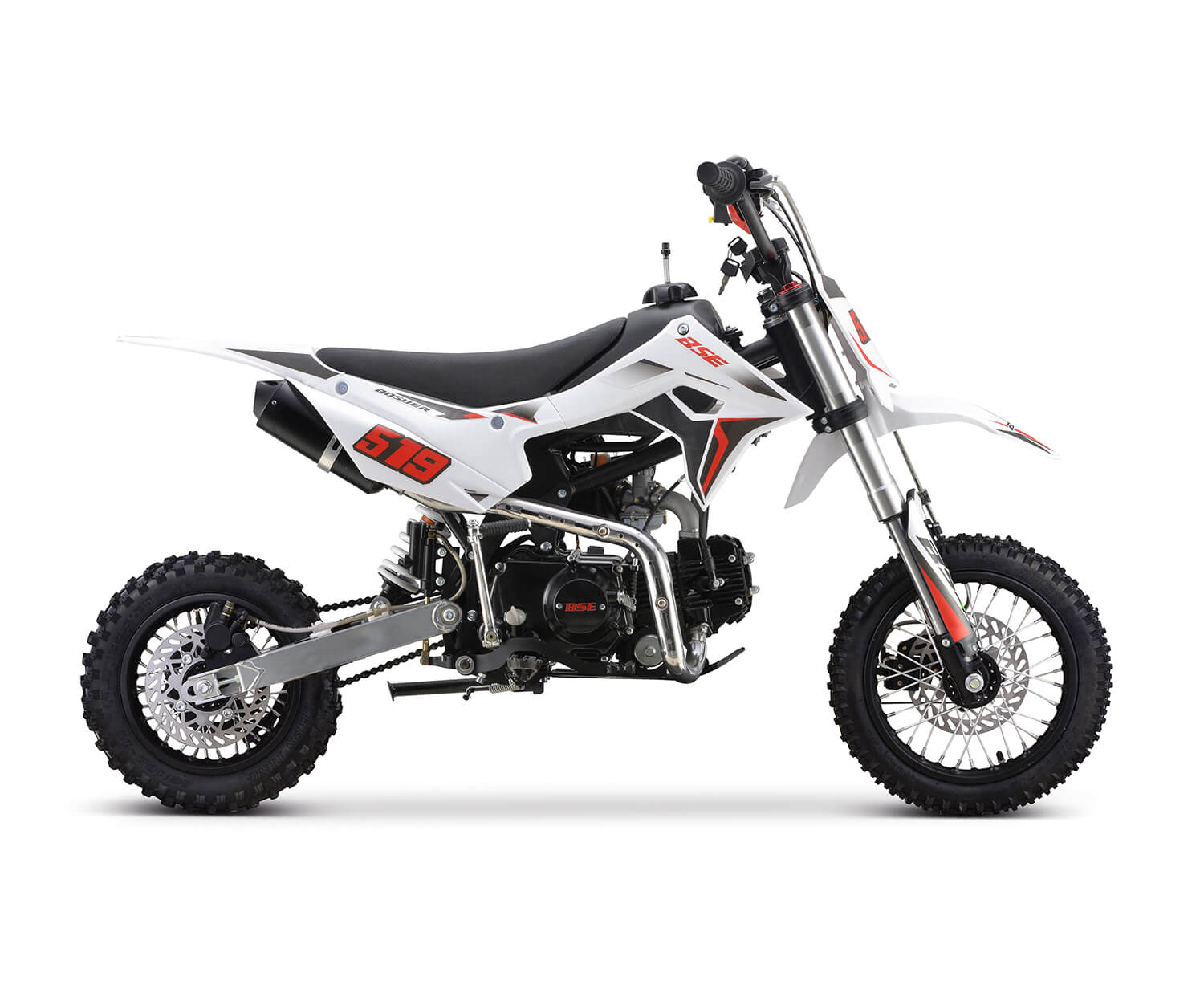
BSE PH02E — 125cc Automatic Trail Bike
- Engine: 125cc single, fully automatic (no clutch lever and no manual gear shifting), ~6.5 kW (≈8.7 hp), 3 L fuel tank
- Seat height: 26.4 in (670 mm) · Wet weight: 137 lb (62 kg)
- Why it wins: You twist the throttle and go — no clutch, no stalling, no gear hunting. It is the fastest path to “riding,” which is exactly what a nervous adult needs on day one.
- Who it is for: Newer and lighter riders who want a low seat height and fully automatic operation. BSE positions this as an approachable entry model for beginners and smaller adults.
 ★ Best Mid-Size 250cc Option (Room to Grow)
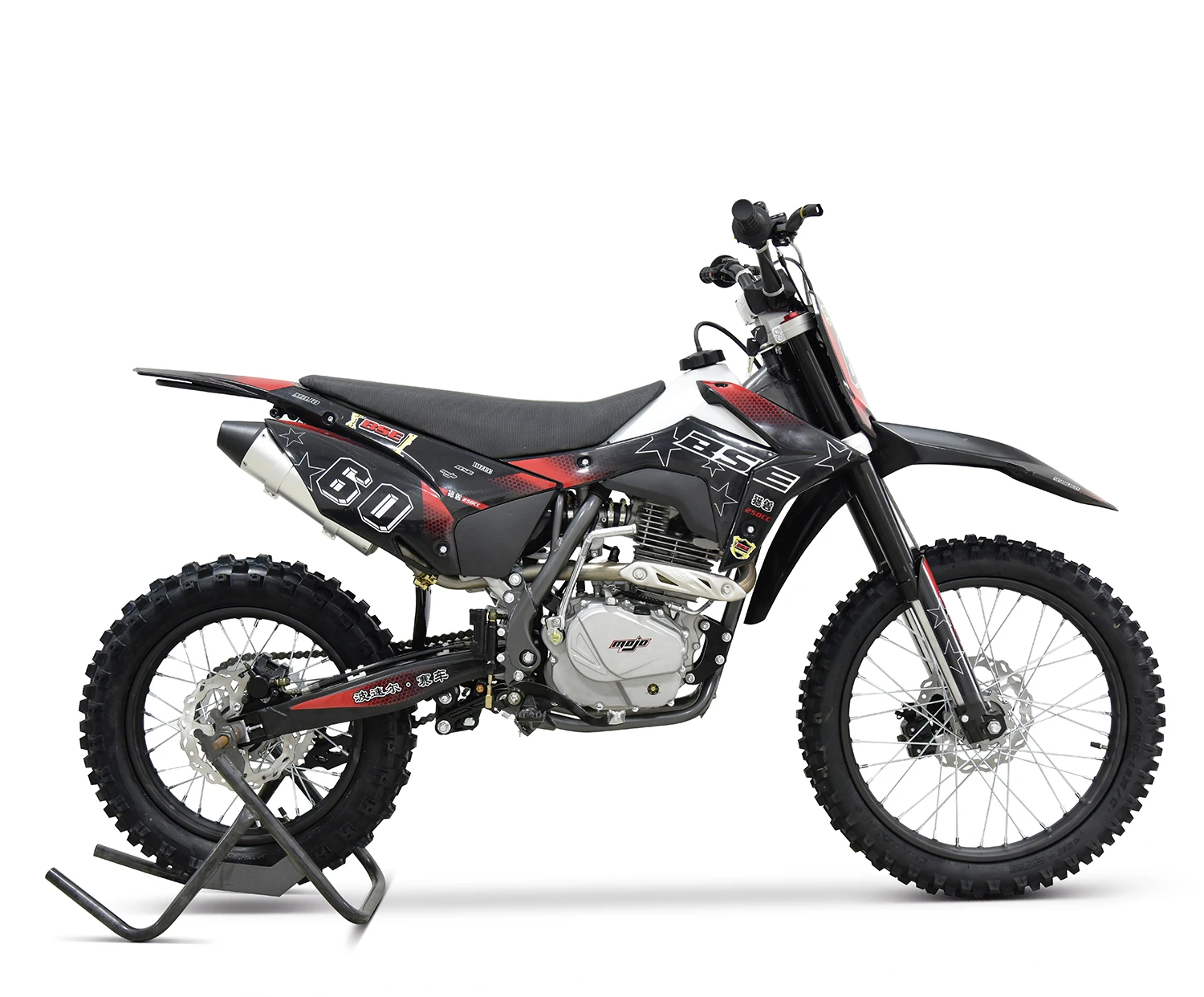
BSE PH15B — 250cc Mid-Size Dirt Bike
- Engine: 249cc (TY 249) single, 5-speed manual, 16.5 kW (≈22 hp), 21/18 wheels
- Seat height: 34.6 in (880 mm) · Wet weight: 227 lb (103 kg)
- Why it wins: Enough power to keep you happy for years and enough geometry for taller riders, without the race-bike aggression of a motocross 250.
- Who it is for: A better option for taller or heavier adult riders who want one bike that lasts from first season through intermediate trails.
 Runner-Up — The In-Between Step
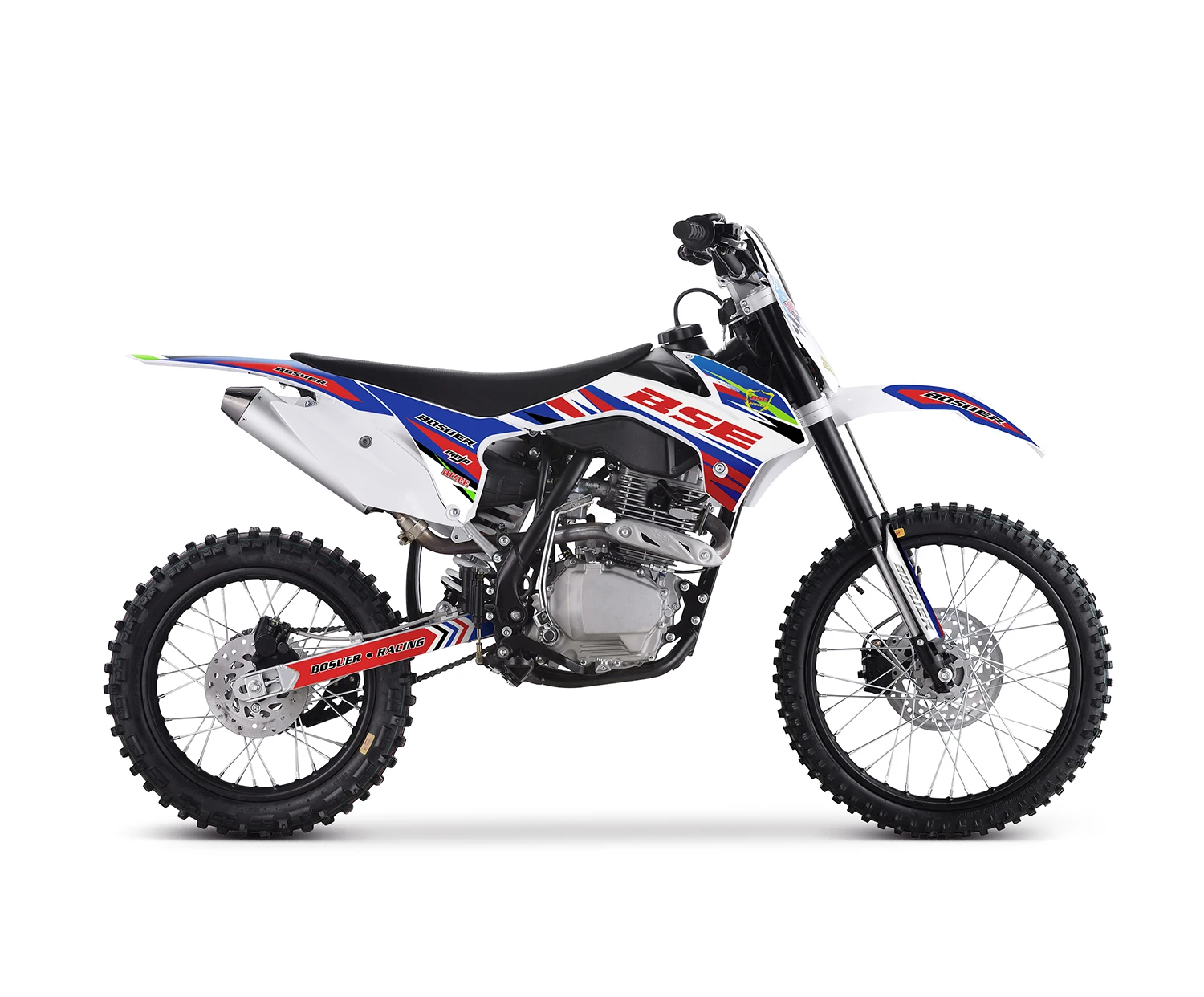
BSE PH12A — 150cc Enduro / Trail Bike
- Engine: 150cc single — more pace than a 125, less intimidating than a 250
- Seat height: ~34 in (86 cm) · Wet weight: 196 lb (89 kg)
- Why it wins: The Goldilocks option for adults who found a 125 a touch small but are not ready for a 250.
 Best Electric Option
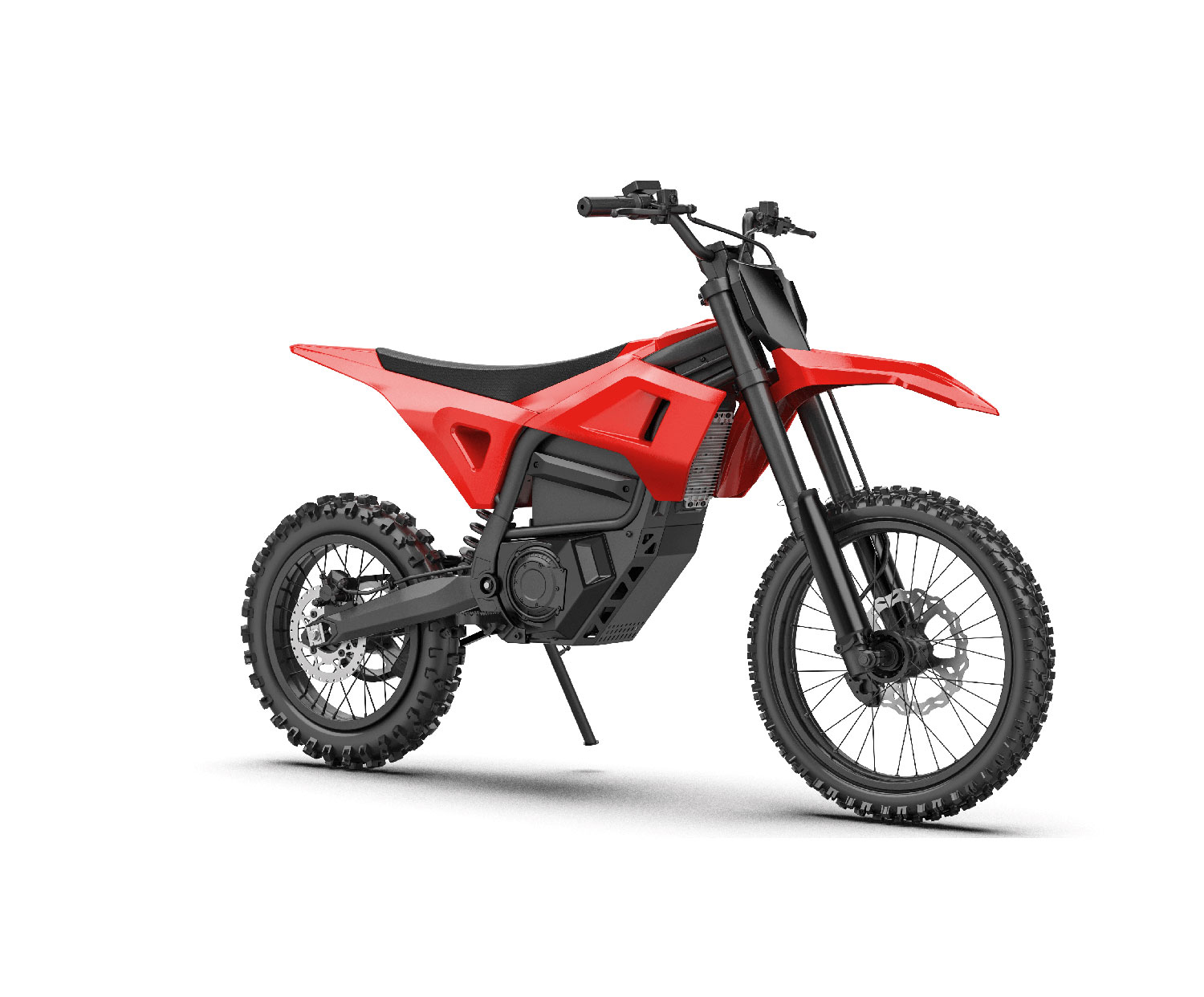
BSE S5 / E72 — Electric Dirt Bikes
- S5 (beginner electric pick): 72V 25Ah battery, 3,000W motor, up to 43 miles per charge, 47 mph top speed, ~143 lb (65 kg), ≈5-hour charge.
- E72 (performance / advanced): 72V 40Ah battery, 5,000W nominal (17,000W peak), up to 75 miles per charge, 65 mph top speed, ~159 lb (72 kg), 5–6-hour charge.
- Why they win: Instant smooth torque, near-silent operation, and almost no maintenance — ideal if you ride in noise-sensitive areas or want the simplest possible ownership experience.
- Which for a beginner? The S5’s tamer power delivery suits a first bike. The E72 is positioned by BSE for aggressive off-road and experienced riders, not as a typical beginner model.
All of the ★ models above are available factory-direct through our dirt bike product line. If electric is your direction, see the full electric dirt bike lineup and our explainer on gas vs. electric dirt bikes.
Top Picks Side-by-Side
| Model | Displacement | Transmission | Seat Height | Wet Weight | Best For |
|---|---|---|---|---|---|
| BSE PH02E ★ | 125cc | Automatic (no gears) | 26.4 in | 137 lb | Low-seat automatic — beginners |
| BSE PH12A | 150cc | Manual | 34 in | 196 lb | Step-up from a 125 |
| BSE PH15B ★ | 250cc (249) | 5-speed manual | 34.6 in | 227 lb | Taller / heavier riders, room to grow |
| BSE S5 ★ | Electric (72V 25Ah) | Automatic | — | 143 lb | Beginner electric pick |
| BSE E72 | Electric (72V 40Ah) | Automatic | — | 159 lb | Experienced / performance use |
Specs listed are current BSE factory figures (August 2026). Electric seat heights vary by setup — see the BSE product pages for exact dimensions.
Automatic vs. Manual Clutch: Which Should a Beginner Get?
This is the single most common question we hear from new riders. The honest answer: an automatic (or semi-automatic) transmission lets you learn to ride today; a manual clutch lets you ride any bike later.
- Automatic (no clutch, no shifting): You focus 100% on balance, throttle, and braking. Ideal for nervous beginners and anyone who wants a relaxed trail day. The BSE PH02E, for example, is fully automatic — no clutch lever and no manual gear shifting at all.
- Semi-automatic (foot shift, no clutch lever): A middle ground that avoids clutch stall-outs while still letting you pick gears. A good option for riders who want a little more control without the clutch skill.
- Manual clutch: Adds a real skill — and mastery of the clutch is the foundation of advanced riding, hill climbs, and technical terrain. Many beginners can start developing clutch control with focused practice, but the time required varies by rider.
Our advice: if you plan to ride for years, learn the manual clutch from the start on a bike with forgiving power (like the PH15B). If you just want to have fun now and worry about technique later, start on an automatic and upgrade when you are ready. Either way, our clutch riding guide will get you up to speed quickly.
Gas vs. Electric for Beginners
Electric dirt bikes have crossed an important threshold: they are now genuinely viable first bikes, not toys. For a beginner adult, the deciding factors are usually:
| Factor | Gas (125–250cc) | Electric (60–72V) |
|---|---|---|
| Learning curve | Clutch + throttle + brake | Throttle + brake only — simplest |
| Range | Varies widely with tank size, tuning, terrain and throttle use (a 3 L tank like the PH02E is a fraction of a large-tank trail bike) | S5: up to 43 mi · E72: up to 75 mi per charge |
| Maintenance | Oil, filter, carb/EFI, chain | Battery + chain — very little else |
| Noise | Loud (trail restrictions may apply) | Near-silent — ride more places |
| Refuel / recharge | 2 minutes | 5–6 hours (or fast charger) |
If your local trails allow them, an electric first bike removes the clutch fear and the maintenance burden entirely — but plan your rides around charging. Read our full gas vs. electric dirt bike breakdown before you decide.
New vs. Used & Budget Planning
A common beginner trap is buying a used bike that “just needs a little work” — then spending the season wrenching instead of riding. For your first bike, reliability is worth more than a bargain.
- New, budget & import brands (Apollo, Rokon, BSE and similar): $2,000–$3,500 for a 125–250cc entry bike from a factory-direct manufacturer — warranty, known condition, and no hidden damage. See our dirt bike cost guide for current ranges.
- New, Big Four (Honda, Yamaha, Kawasaki, Suzuki): a 250cc trail bike typically starts around $4,500–$6,000+ MSRP, and their popular 125cc models run about $3,000–$4,500. You pay for the name, the dealer network, and stronger resale.
- Used: under ~$3,000 you are mostly in used or budget-brand territory. Used can save 20–40% but budget for tires, chain, oil, and possible repairs — have an experienced friend inspect any used bike before you hand over cash.
Whatever you buy, remember the real “entry cost” includes gear. A reasonable starter budget is around $300–$800 for a DOT/ECE helmet, boots, gloves, goggles, and a chest protector, depending on brand and protection level — and do not skip any of it.
Note: Factory-direct pricing can be substantially lower than retail dealership pricing and varies by supplier, configuration, shipping and market.
Gear & Your First Ride: Setting Yourself Up to Succeed
You have picked the right bike. Now set yourself up for a great first season:
- Get proper gear first. Helmet, boots, gloves, goggles, chest protector — non-negotiable. Our helmet sizing guide helps you get the fit right.
- Learn the controls standing still. Clutch, throttle, brakes, and gear shifter before you ever roll.
- Start in an open field. Practice starting, stopping, and figure-8s before touching any trail.
- Take a training course. Programs from the Motorcycle Safety Foundation (MSF) or local off-road schools cut your learning curve dramatically (some insurers offer course-completion discounts — check with yours).
- Check the rules. Confirm age, license, and registration requirements where you live — see our how old to ride and licensing guides.
If the bike feels a touch tall, you can often lower it with lowering links or sag adjustment — keep changes reversible if resale matters to you.
Frequently Asked Questions
What is the best beginner dirt bike for adults?
For most adults, a 125cc–150cc trail bike with a forgiving, low-maintenance engine is the best first bike — models like the BSE PH02E (125cc automatic, low seat) are ideal for absolute beginners. Taller or heavier riders should look at a 250cc like the BSE PH15B for more room to grow.
Is a 250cc dirt bike too much for a beginner?
Not necessarily. A trail-tuned 250cc (not a motocross 250) produces smooth, manageable power and is a common first bike for taller adults. What is too much for a beginner is a 450cc or an aggressive motocross-tuned machine. Match the bike to your height, weight, and confidence, not just the number on the fender.
Should a beginner get an automatic or manual dirt bike?
Fully automatic (no shifting) and semi-automatic (foot shift, no clutch lever) transmissions are the easiest ways to start riding the same day — ideal for nervous beginners. A manual clutch takes focused practice, and the time varies by rider, but it unlocks every bike on the market later. If you plan to ride for years, learn the manual clutch early on a forgiving bike.
How much does a beginner dirt bike cost in 2026?
A new beginner 125–250cc trail bike from a budget or import brand (Apollo, Rokon, BSE and similar) ranges from roughly $2,000 to $3,500; a Big Four 250cc model starts around $4,500–$6,000+. Budget an extra $300–$800 for essential gear. Used bikes cost less but often need budgeted repairs. See our dirt bike cost guide for the full breakdown.
How fast does a beginner dirt bike go?
A dirt bike’s top speed varies by model, gearing, engine tune and rider weight — trail-oriented bikes are built around controllable low- and mid-range power rather than maximum speed. As a rough guide, a 125cc four-stroke trail bike tops out around 45–60 mph and a 250cc trail model around 70–75 mph. Two-stroke motocross versions are faster still, but they are race bikes, not first bikes. Check our 125cc speed guide for details.
Conclusion: Buy the Bike That Fits, Not the Bike That Impresses
The best beginner dirt bike for adults in 2026 is the one that fits your body, your confidence, and your riding plan — not the one with the biggest number on the fender. Match the engine size to your height and weight, choose an automatic if you want to ride today, and never skimp on gear.
Your next steps:
- Use our size guide to confirm your fit.
- Set your budget with the cost guide.
- Pick a model from the picks above — and if you are in a wholesale market, reach out about factory-direct pricing.
Continue Learning
Explore BSE Motor Beginner Dirt Bikes
From the low-seat 125cc PH02E to the 250cc PH15B and the electric S5, BSE Motor builds beginner-friendly dirt bikes for riders worldwide — available factory-direct for individuals and wholesale buyers.
View Beginner Dirt Bikes →References
- Fortune Business Insights. “Off-Road Motorcycle Market Size, Share & Industry Analysis, 2032.” Fortune Business Insights, 2025. https://www.fortunebusinessinsights.com/off-road-motorcycle-market-106389
- Motorcycle Safety Foundation. “Basic Off-Road Riding Courses & Tips for New Riders.” MSF. https://www.msf-usa.org
- RevZilla. “How to Pick Your First Dirt Bike: Engine Size, Ergonomics & Budget.” RevZilla Common Tread, 2025. https://www.revzilla.com/common-tread
 EN
EN  FR
FR  DE
DE  AR
AR  RU
RU  ES
ES  PT
PT  CN
CN